

What Is a Fractional CO2 Laser and How Does It Work?

Fractional CO2 Laser is a powerful skin-resurfacing technology, but it is not a magic eraser. It uses carbon dioxide energy at 10,600 nanometers. The beam creates thousands of microscopic treatment columns in the skin. Untreated tissue remains between them. This design supports faster healing than fully ablative resurfacing, while encouraging collagen remodeling.

Dr. Tina Alster, a leading dermatologic surgeon and laser researcher, describes fractional resurfacing as “a safer alternative to traditional laser resurfacing.” Her comment reflects the central idea: controlled injury can produce visible improvement with less recovery. Yet “safer” does not mean risk-free. Skin tone, treatment depth, cooling, and aftercare all influence the outcome. A warm, prickling sensation is common during treatment. Redness may resemble a sunburn for several days.

Industry data shows why this technology continues to attract attention. Grand View Research reports that the global laser skin resurfacing market was valued at approximately US$1.1 billion in 2023. Its report also projects strong growth through 2030, supported by demand for minimally invasive aesthetic procedures. However, market growth does not prove that every treatment is suitable. The American Society of Plastic Surgeons and dermatology literature emphasize individualized assessment, especially for patients with darker skin tones or active skin conditions.

This guide explains how Fractional CO2 Laser devices work, what they can realistically improve, and where their limitations appear. Results vary. Some scars soften. Fine lines may diminish. Texture can remain uneven. That uncertainty deserves honest discussion before treatment.
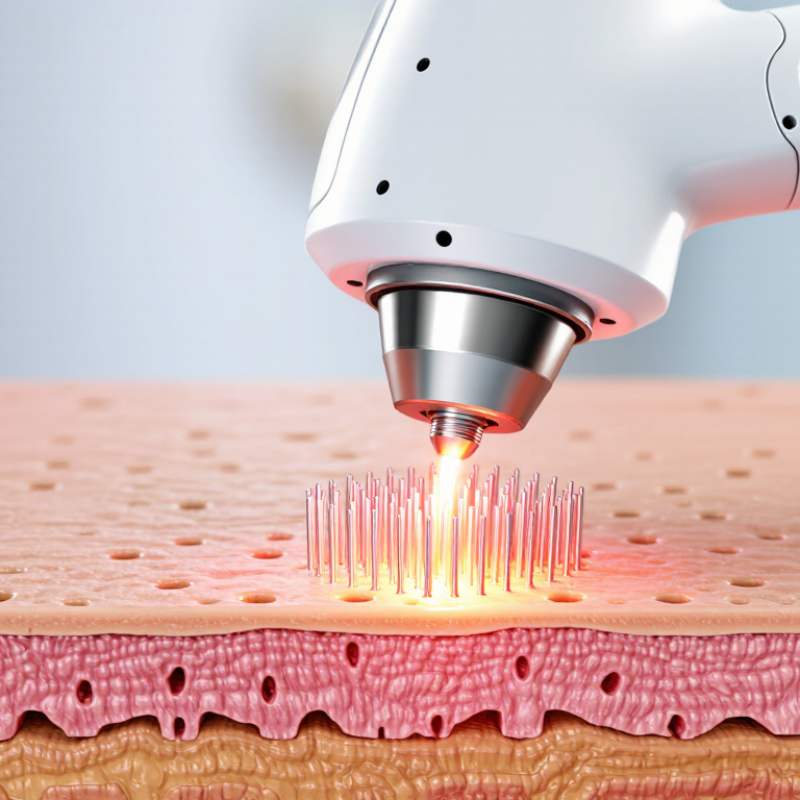
What Is a Fractional CO2 Laser and How Does It Work?

What Is a Fractional CO2 Laser?

A fractional CO2 laser is a skin-resurfacing device that uses carbon dioxide light at a wavelength of 10,600 nanometers. Because skin water absorbs this energy, the beam heats tiny, precisely spaced columns in the skin. “Fractional” means treated spots sit beside untreated skin, rather than the whole surface being exposed at once. Those untouched bridges help the skin repair between treatment columns. Not a peel.

The heat removes or disrupts small areas of tissue and can prompt collagen remodeling during healing. In practice, settings vary by skin concern, area, and individual tolerance; deeper or denser treatment may involve more downtime and risk. Redness, swelling, discomfort, pigment changes, and infection are possible. The term “fractional” alone does not predict results. It can sound more exact than it is.

The American Society of Plastic Surgeons’ 2023 procedural statistics recorded 25.4 million cosmetic minimally invasive procedures in the United States, including laser skin resurfacing. That broad category does not distinguish fractional CO2 treatments, so it should not be read as a procedure-specific count. A qualified clinician can assess skin history and treatment goals, then explain likely recovery and alternatives before treatment. Even a careful plan cannot guarantee a particular outcome.

What Is a Fractional CO₂ Laser and How Does It Work?

Typical emitted wavelengths of selected skin-treatment lasers

A CO₂ laser emits infrared light at about 10,600 nm. In fractional mode, the beam is delivered as many tiny treatment columns, leaving surrounding skin untreated. This pattern supports healing between treated areas; the wavelength itself is unchanged.

How Fractional CO2 Laser Energy Affects the Skin

A fractional CO2 laser sends infrared energy into the skin, where water absorbs much of it. The beam is delivered in tiny columns rather than across the entire surface. Small areas between these columns remain untreated. That matters.

The energy creates controlled heat and microscopic zones of injury. The skin then repairs these areas, producing new tissue and stimulating collagen remodeling over time. Higher energy can create deeper treatment zones, while closer spacing treats a larger portion of the surface. More energy is not automatically better. It may also mean more redness, swelling, discomfort, and downtime.

The skin can feel hot and tight after treatment, and redness may last for days or longer. Healing varies. Skin tone, treatment settings, medical history, and aftercare all influence the response. A qualified clinician should assess these factors and explain risks such as infection, pigment changes, or scarring. Even with careful planning, recovery is not perfectly predictable; that uncertainty deserves an honest conversation before treatment.

The Step-by-Step Process of Fractional CO2 Laser Treatment

A fractional CO2 laser appointment usually begins with a consultation. A clinician reviews your skin, medical history, medicines, and goals to decide whether treatment is suitable.

The skin is cleansed, and a topical numbing cream may be applied for a period of time. It helps, but discomfort can still occur. Protective eyewear is used before the laser is activated.

During treatment, the clinician moves the handpiece across the planned area.

The laser creates tiny columns of controlled heat, leaving nearby skin untreated. This fractional pattern encourages skin repair while allowing surrounding tissue to support healing.

You may feel warmth, prickling, or brief snapping sensations. Treatment time depends on the area and settings.

The clinician should adjust these choices to your skin and the intended outcome, rather than promise a uniform result.

Afterward, the skin may look red and feel swollen, much like a sunburn.

Small pinpoint areas or light crusting can appear as it heals. The clinician provides specific instructions for gentle cleansing, moisturising, and sun protection; follow those instructions rather than picking at the skin.

Recovery varies, and redness may last longer for some people.

Contact the treating clinician if pain worsens, redness spreads, or healing seems unusual.

I might expect a clear day-by-day timeline, but real skin is less predictable.

Common Uses and Skin Concerns It Can Address

A fractional CO2 laser is an ablative treatment: it creates tiny columns of controlled heat in the skin. Untreated skin between those columns supports healing, while the treated areas trigger collagen remodeling. Small columns. Real downtime.

Clinicians may consider it for acne scars, fine lines, rough texture, and sun-related changes. It can soften the pitted edges of some scars and smooth crepey skin around the mouth or eyes. Results vary, and one session may not be enough.

Procedure statistics The American Society of Plastic Surgeons’ 2023 procedural statistics recorded about 3.13 million laser skin-resurfacing procedures in the United States. That figure covers different laser types, not fractional CO2 alone.

Treatment can leave skin red, swollen, and sensitive for days; deeper settings may require longer recovery. Temporary darkening or lightening can occur, especially in skin prone to pigment changes.

A qualified clinician should review skin type, medications, healing history, and the specific concern before treatment. Active irritation or infection may mean postponing it. No laser makes scars disappear completely, and outcomes are not perfectly predictable—a limitation worth discussing before booking.

Safety, Recovery, and Potential Side Effects

A fractional CO2 laser creates tiny columns of controlled heat in the skin, leaving surrounding tissue intact. This design supports faster healing than fully ablative treatment, but it is not risk-free. The American Academy of Dermatology recommends treatment by a qualified medical professional after reviewing skin type, medications, scarring history, and previous cold-sore outbreaks. Eye protection is essential during every session.

Recovery commonly includes swelling, warmth, redness, and pinpoint oozing. Many clinical reviews report visible peeling for about three to seven days, while redness may last several weeks. A 2023 review in Lasers in Medical Science noted that post-inflammatory hyperpigmentation remains one of the most frequent concerns, especially in darker skin tones. Published studies commonly report pigment changes in roughly 1% to 10% of treated patients, depending on settings and follow-up time. Numbers vary.

Potential side effects include prolonged redness, milia, acne-like eruptions, bacterial infection, scarring, and uneven pigmentation. Antiviral prevention may be considered for patients with recurrent herpes, according to dermatology clinical guidance. Strong sunscreen, gentle cleansing, and avoiding picking are practical recovery measures. Heat, intense exercise, and unapproved creams can worsen irritation. A 2022 systematic review in Dermatologic Surgery emphasized that complication rates depend heavily on energy settings, treatment depth, and patient selection. That point is easy to underestimate. Even experienced clinicians cannot predict every reaction. Increasing pain, pus, fever, or spreading redness needs prompt medical assessment.

Go to Top