

A board game may begin as a sketch, but its success depends on what arrives in the box. The cards need to shuffle smoothly. The board should fold without splitting, and the colors must remain clear under ordinary room lighting. Choosing a Professional Board Games Manufacturer affects every one of these details, from material selection to final inspection. It also shapes production schedules, communication, and the cost of correcting mistakes.
A promising sample is useful, but it tells only part of the story. Ask how the manufacturer handles artwork files, component proofs, packaging specifications, and changes after approval. Request clear answers about minimum order quantities, production timelines, and quality checks. Then compare those answers with your actual needs. A small first run has different pressures from a large retail order. The cheapest quote may leave important details unclear. That matters.
Good questions often reveal more than a polished sales presentation. Can the team explain how it checks card alignment? What happens if a sample’s finish differs from the production batch? Ask for relevant project examples, and verify that the proposed materials suit your game’s intended use. These checks do not guarantee a flawless outcome. Real production can involve trade-offs, and even careful plans may need revision. A useful manufacturer will discuss those limits plainly, rather than promise perfection. The ten tips ahead offer a practical way to assess suppliers, compare proposals, and make a better-informed choice before committing your design to production.
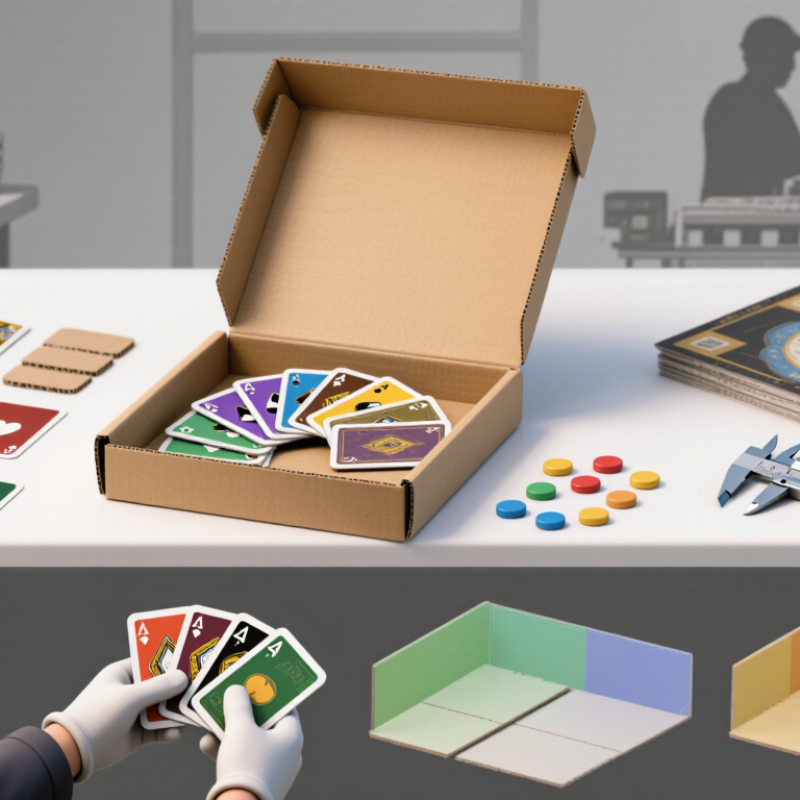
Before choosing a professional board game manufacturer, define what your game must physically become. Record the player count, target age, play time, box size, and expected production quantity. A family game with thick cards needs different equipment from a strategy game with wooden pieces.
List every component in measurable detail. Specify card dimensions, paper thickness, coating, token material, board folding style, and insert design. Add color requirements, assembly instructions, packaging limits, and preferred delivery dates. Small details matter. A slightly narrow box can bend cards during packing.
Request a prototype before approving mass production. Check whether cards shuffle smoothly, tokens fit the tray, and printed colors remain readable under normal light. Ask for material samples and a written quality-control process. Production costs can change when component counts increase, so leave room in the budget. Many first estimates are too optimistic. That mistake is common, and it deserves honest review. Also confirm the manufacturer can support required safety testing and documented material standards for your target market. A clear production brief helps both sides identify risks early, compare quotations fairly, and avoid expensive changes after manufacturing begins.
A professional board game manufacturer should show more than attractive samples. Ask how long the team has produced card decks, boards, tokens, and molded pieces. Experience matters when a prototype becomes a large production order. I look for clear answers about printing methods, material choices, assembly lines, and quality controls. Vague promises are warning signs.
Request a factory tour, video inspection, or recent production records. Check whether operators measure card thickness, color consistency, box strength, and component counts. A reliable manufacturer should explain its testing process without hesitation. Ask for a sample made with the final materials, not a polished display sample. Small differences can affect shuffling, folding, and shelf presentation.
Capacity also deserves close attention. Confirm monthly output, backup equipment, staffing, and realistic lead times. A factory may produce excellent samples but struggle during seasonal demand. I once underestimated the effect of packaging changes on assembly time. That mistake taught me to request a detailed production schedule. Still, schedules can fail. Weather, material shortages, or machine repairs may cause delays. The manufacturer should describe its response plan and provide regular updates. Review the contract, inspection standards, and approval process carefully. Trust grows through evidence, not confident language.
When comparing board game materials, ask for samples rather than relying on polished photos. Feel the difference. A linen-textured paperboard can improve grip, while a smooth finish may show fingerprints under bright light. Check card thickness, coating, and corner cuts together; each affects shuffling and wear. For wooden pieces, examine grain, paint coverage, and whether small parts sit steadily on the board.
Quality claims need evidence. Request written material specifications, sample approval records, and inspection criteria for color, dimensions, and print alignment. Ask how the manufacturer checks a finished box, including whether components fit without bending. A few millimeters matter when the rulebook pushes the lid upward. Tolerances may vary by process, so agree on acceptable limits before production. I would not treat one attractive sample as proof of consistent output; that assumption is easy to regret.
Customization can include card shapes, insert layouts, finishes, and packaging, but each choice affects cost and production time. A custom insert may protect miniatures well yet leave little room for sleeved cards. Ask for a digital layout, then test a physical prototype with the actual components. Consider replacing special finishes with simpler ones if they obscure text or scuff easily. I still find that a practical prototype reveals problems a neat specification sheet misses.
Compare quotes on total landed cost, not unit price alone. A low estimate may exclude custom inserts, proof revisions, freight, or protective cartons. Ask each manufacturer to itemize tooling, setup, sampling, packing, and shipping. That matters. Confirm what happens if a color proof fails or a component arrives short. A sample should match the final board thickness, card finish, and box fit as closely as possible.
Treat the production schedule as a risk plan. McKinsey’s 2020 supply-chain risk study found that companies can expect disruptions lasting a month or longer about every 3.7 years. This is not a board-game-specific forecast, but it shows why a single promised ship date is weak evidence. Request dated milestones for proof approval, material purchasing, assembly, inspection, and dispatch. Ask which delays the factory can control and which depend on suppliers. Keep a realistic buffer.
Communication reveals reliability before mass production begins. Agree on one contact, response times, and a written process for approving changes. Request brief progress updates with photos of printed sheets, punched tokens, or packed cartons. Ask for defect records and the inspection criteria behind them. A polished sales reply is reassuring, but it does not prove consistent production. A spreadsheet alone cannot show every risk; unclear assumptions often survive until the schedule is already tight.
Planning ranges to consider when reviewing pricing, timelines, communication, and supplier reliability.
Prototype approval and mass production usually require the most time. Request a stage-by-stage schedule, confirm what is included in the quoted price, and use milestone updates to evaluate communication and reliability. Actual timing varies by component complexity, order quantity, quality requirements, and destination.
Choosing a professional board game manufacturer requires more than comparing quotes. Compliance should be checked before discussing large orders. Request current factory licenses, material declarations, safety test reports, and quality-control procedures. Confirm that inks, coatings, cardboard, plastic parts, and packaging meet your target market’s requirements. Documents can expire. Check dates, issuing laboratories, and product scope carefully.
Samples reveal what paperwork cannot. Ask for a pre-production sample with final materials, printing methods, box dimensions, and component counts. Inspect card edges, board folding, color consistency, smell, and loose parts. Measure tolerances with simple tools. A sample may look excellent while hiding production weaknesses. I once focused too heavily on artwork and missed a small box-fit problem. That mistake delayed packing.
Use a written approval sheet. Include photos, dimensions, acceptable defects, carton marks, and testing responsibilities. Then request a pilot run before full production. Reliable communication matters when changes occur. Ask how the factory handles defects, replacement parts, late shipments, and confidential files. The cheapest quotation may create expensive friction later. A useful partner shares realistic capacity, lead times, and limitations instead of promising everything. Review response speed and problem-solving during sampling. Small delays are informative. If every concern receives a vague answer, reconsider the relationship. Long-term cooperation depends on consistent quality, transparent records, and a practical plan for improving future orders.